
Driving Efficiency in Modern Cable Manufacturing: The Automatic High-Speed Stranding Machine
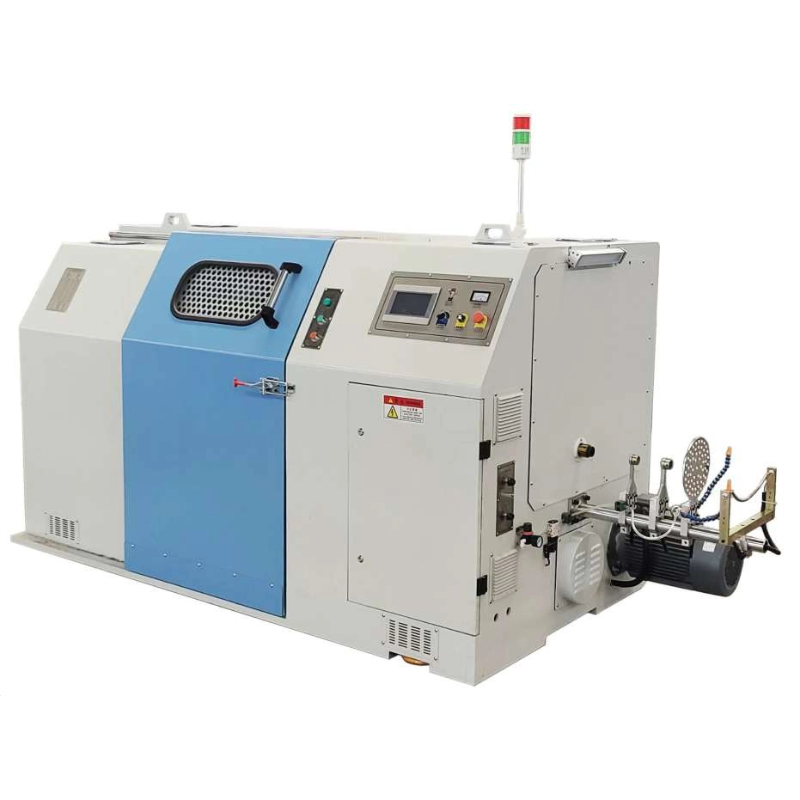
In the fast-evolving electrical and telecommunications industries, the demand for high-quality, durable, and precisely engineered cables continues to skyrocket. From automotive wiring harnesses and power transmission lines to high-speed data cables, modern applications require flawless conductor geometry and uniform strength. At the heart of this manufacturing precision lies the Automatic High-Speed Stranding Machine—a vital piece of industrial equipment engineered to transform individual wires into robust, flexible stranded conductors.
The Engineering Behind High-Speed Stranding
Stranding is the mechanical process of twisting multiple single strands of wire—typically copper, aluminum, or alloy—around a central axis to form a single, cohesive conductor. Traditional stranding methods often suffered from speed limitations, tension inconsistencies, and high labor dependency.
The modern automatic high-speed stranding machine solves these bottlenecks by integrating advanced mechanical design with intelligent automation. Utilizing high-speed bow or tubular configurations, these machines rotate around the wire payload at thousands of revolutions per minute (RPM). Equipped with Programmable Logic Controllers (PLCs) and servo motor driving systems, the machine automatically regulates crucial parameters such as twisting pitch, line speed, and tension control across every individual pay-off reel.
Key Technological Advantages
Unmatched Production Speed and Yield: Operating at rotational speeds frequently exceeding 2,000 to 3,000 RPM, modern high-speed stranders drastically shorten production cycles while maintaining continuous, 24/7 output capabilities.
Precision Tension & Lay Length Control: Automatic tension feedback sensors continuously measure wire resistance. By dynamically adjusting brake and take-up speeds, the machine eliminates loose strands, wire breakage, and uneven pitch lengths.
Automated Operation and Safety: Modern stranders feature touch-screen Human-Machine Interfaces (HMIs) for quick recipe selection, automatic spool loading/unloading, and instant fault detection. Fully enclosed protective housing ensures low noise operational levels and operator safety at extreme rotational speeds.
Energy Efficiency: Advanced inverter drives and lightweight carbon-fiber bows reduce power consumption, lowering overall operational costs for cable manufacturers.
Industry Applications
Automatic high-speed stranding machines are indispensable across a wide range of industrial sectors:
Automotive & Aerospace: Producing ultra-flexible, lightweight wiring harnesses capable of withstanding extreme vibration and temperature fluctuations.
Telecommunications & Electronics: Twisting fine copper wires for HDMI, USB, and LAN network cables where precise geometry is required to minimize signal attenuation.
Power Distribution: Fabricating thick, multi-core aluminum and copper conductors for low-to-high voltage power lines and renewable energy installations.
Conclusion
As industries transition toward smart manufacturing and green energy, the requirements for wire and cable quality have never been higher. The Automatic High-Speed Stranding Machine represents a perfect synergy of speed, automation, and material science. By reducing downtime, eliminating human error, and delivering superior conductor uniformity, investing in advanced stranding technology remains a cornerstone strategy for modern cable factories aiming to stay competitive in the global market.
Related Posts
CONTACT US
First class quality service and professional after-sales team.
Get in Touch
*We respect your confidentiality and all information are protected.