
Functions and Application Areas of Wire and Cable Machinery
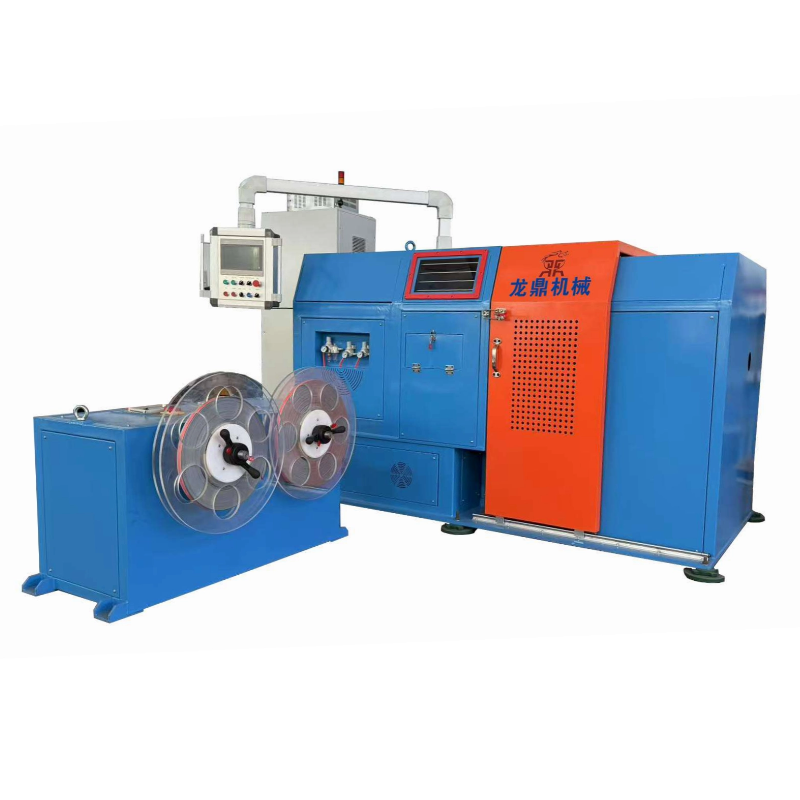
Wires and cables serve as the "blood vessels" of the national economy. From power grid trunk lines to household outlets, and from communication base stations to automotive wiring harnesses, the formation of every cable relies on a core piece of manufacturing equipment: the wire and cable extruder. This machine performs the critical task of uniformly coating conductor cores with insulating materials—such as plastic or rubber—thereby directly determining the cable's electrical performance, mechanical strength, and service life.
I. Core Function: Precision Extrusion and Single-Pass Forming
The operating principle of a wire and cable extruder involves heating and melting insulating materials—such as PVC, PE, or XLPE—and using a screw to continuously pressurize and extrude the melt through a die head. The material tightly coats a conductor (copper wire, aluminum wire, or stranded core) moving at high speed; the assembly then passes through a cooling trough to set its shape, forming the insulation or sheathing layer.
Taking the equipment shown in the image as an example, it operates through the coordination of five major functional modules:
- **Drive System**: A high-power motor and gearbox on the left provide stable, adjustable torque and rotational speed to the screw, ensuring a consistent extrusion rate without fluctuations.
- **Extrusion Barrel**: The outer wall of the long barrel features segmented heating elements and air-cooling motors; this allows for precise temperature control across each section, maintaining the plastic in an optimal state of plasticization and preventing scorching or poor material processing.
- **Die Head**: The high-precision flange-mounted die head on the right allows for the interchange of die cores and sleeves based on cable specifications, controlling coating thickness and concentricity.
- **Cooling and Haul-off**: After extrusion, the wire undergoes multi-stage cooling combined with constant-speed hauling to ensure a stable wire diameter and a smooth surface finish.
- **Mobile Carriage**: The die head assembly can move along guide rails, facilitating tasks such as threading, die changing, and routine maintenance. The entire system enables a continuous production process—ranging from conductor feeding, plastic melting, and extrusion coating to cooling and take-up—achieving single-line speeds of hundreds of meters per minute and maintaining insulation thickness tolerances within the range of a few hundredths of a millimeter.
II. Application Areas: Spanning Energy, Telecommunications, and Manufacturing
Wire and cable extruders are not limited to a single model; rather, they form a comprehensive equipment portfolio tailored to various cable types, widely used in:
1. **Power Cable Manufacturing**: From household BV/BVR building wires and low-voltage power cables to 10kV, high-voltage, and extra-high-voltage cross-linked cables, specialized extrusion lines are required to apply insulation layers and outer sheaths;
2. **Construction and Home Wiring**: Extrusion of insulation for general lighting wires, socket wiring, and flame-retardant/fire-resistant cables, where high standards for surface finish and color consistency are essential;
3. **Communication and Data Cables**: Extrusion of insulation and shielding layers for network cables, coaxial cables, fiber optic sheathing, and data cables, requiring minimal eccentricity and stable lay length (pitch);
4. **Automotive and New Energy Wiring Harnesses**: Thin-wall, high-temperature-resistant extrusion for low-voltage automotive wires and high-voltage charging harnesses—a sector seeing rapid demand growth alongside the rise of new energy vehicles;
5. **Special-Purpose Cables**: Specialty cables—such as flame-retardant, fire-resistant, low-smoke zero-halogen (LSZH), oil-resistant, and high-temperature-resistant types—requiring specialized screw configurations and temperature control systems.
III. Why It Is So Critical
Insulation materials typically account for more than half of the total cost of a compliant wire or cable, and the extrusion process is the pivotal stage where raw materials are transformed into functional performance. Key extruder attributes—such as temperature control precision, screw design, concentricity control, and speed stability—directly determine whether defects like eccentricity, air bubbles, "bambooing" (uneven diameter), or surface scratches occur. These factors, in turn, impact critical performance metrics such as voltage withstand capability and insulation resistance. It is fair to say that the sophistication of extrusion equipment serves as a benchmark for a nation's overall wire and cable manufacturing capabilities. Driven by the rapid growth of sectors such as new energy, UHV (Ultra-High Voltage) power transmission, data centers, and electric vehicles, wire and cable machinery is evolving toward higher speeds, greater intelligence, and improved energy efficiency. Technologies such as fully closed-loop temperature control, in-line diameter measurement, intelligent recipe management, and remote operation and maintenance are making the manufacturing of every meter of cable increasingly precise, efficient, and reliable.
Related Posts
CONTACT US
First class quality service and professional after-sales team.
Get in Touch
*We respect your confidentiality and all information are protected.